Domestic Dog

Dogs were probably the first tame animals.

African Wild Dog

The African wild dog, also called Cape hunting dog or painted dog, typically roams the open plains and sparse woodlands of sub-Saharan Afri...

Dingo

Dingoes, though generally associated with Australia, likely originated from Southeast Asia and were introduced to Australia about 3,000 yea...

Hiển thị các bài đăng có nhãn animals. Hiển thị tất cả bài đăng

Thứ Tư, 16 tháng 11, 2016

Top 9 awesome facts on Moose

This writing is so amazing. I just wanna all of you can enjoy top 9 awesome facts on Moose . Keep seeing to enjoy!

1. MOOSE ARE HUGE.


Moose are the largest members of the deer family, weighing as much as 1200 pounds; they can grow to be 5 to 6.5 feet from hooves to shoulders. This does not include a raised head or antlers, so it's safe to say that the majority of moose tower over all non-basketball players. 
Enjoy our wide range of funny pictures with captions that can make a joyful day.

2. THEY EAT A LOT.


With huge size comes a huge appetite. Moose are browsers and will casually devour 73 pounds a day in the summer and 34 pounds in the winter. They eat an assortment of shrubs, woody plants, and aquatic vegetation; in the winter, their diet is more restricted, so they eat the buds of plants.

3. ORGANISMS OF ALL SIZES POSE A THREAT TO MOOSE.


Moose are formidable opponents with sharp hooves that can kick with tremendous force, but even they have predators. A pack of wolves or a black bear is no match for a healthy adult moose, so bears and wolves typically pick off the young, sick, and old. And even though moose are powerful and quite large, a single bite can do one in: There's a good chance the bite will cause an infection that eventually kills the animal up to two weeks later. 

Moose also have a much smaller menace to worry about: parasites. Brain worm (Parelaphostrongylus tenuis) is a parasite contracted from eating snails. The infectious larvae migrate to the moose's brain and cause neurological damage. "It’s interesting thinking of something as big as a human hair killing a 1200 pound moose, but they do," Carstensen says. 

Another tiny nuisance is the winter tick. Tick infestations depend on the weather and habitat: Harsh winters mean less ticks the following year; when ticks fall off animals to complete their cycle and there's still snow on the ground, they die. So hard, long winters are great news for moose. 

4. THEIR ANTLERS ARE USED FOR FIGHTING...


When fighting off predators, the antlers, or paddles, don't come into play as much as you would think; a moose's first line of defense is its sharp hooves, which are capable of mortally wounding a wolf or bear.

Paddles are only found on males, and used mainly for fighting and displaying. During mating season in autumn, bulls will cover a lot of ground looking for females to mate with. They establish breeding territory by fighting off other males in the area. The fights are not always fight-to-the-death scenarios, and often a competing moose will back away from a fight if the challenger has a more impressive rack of antlers. Great paddles are not the only way to find mates; some males with better navigational skills—or just sheer luck—may come across a female by chance and completely skip antler combat. 

5. ...AND THEY SHED EVERY YEAR.


Moose lose their paddles every winter and grow new ones the following spring. "Antler growth is based on testosterone levels and day length," Carstensen says. "So they start to grow those antlers in the late spring and summer, and they’re covered in velvet. The velvet is vascularized so there is a blood-flow supplying these antlers as they’re growing." By early fall—a.k.a. mating season—bulls start to shed and shine their paddles by rubbing them against trees. Their fuzzy velvet-covered antlers go through a gory transformation, and by October they will have shiny new paddles for competition and display. 

Antlers are also a great indicator of age. With each winter, young moose paddles grow in size: nubs become spikes and spikes become full racks. Bulls in their prime, between ages 5 and 8, have the largest racks. With old age, the antlers become more deformed and less impressive. 

6. ANTLERS ARE HEAVY. 


Just like the moose themselves, antlers can come in different sizes. The paddles are essentially a big bone, so they generally weigh quite a bit; bulls develop muscular necks to help hold up the enormous paddles. A full grown moose's antlers can weigh about 40 pounds. Anyway, this may be one of the most fascinating animal facts until now.

7. THE BABIES NEED HELP FROM THEIR MOM.


Female moose, or cows, generally have 1 to 2 calves in May. On average, the calves weigh about 30 pounds at birth and grow very quickly. Still, baby moose don't have the ability to run or protect themselves very well, so the mother stays with her offspring for a year and a half, fighting off wolves and bears that try to pick off the young calves.

8. THEY'RE GREAT SWIMMERS.


Moose are naturally gifted swimmers. It's common to see one hop right into a lake and swim across at up to 6 mph. The animals have an innate ability to know how to swim, so even calves can swim. 

9. THERE ARE FOUR SUBSPECIES IN NORTH AMERICA.


Moose can be categorized into four different species in North America: the eastern moose (A. alces americana), the Shiras moose (A. alces shirasi), the Alaskan moose (A. alces gigas), and the northwestern moose (A. alces andersoni), which Carstensen works with in Minnesota. Moose can be distinguished by different sizes and antler shapes. The largest moose is the Alaskan moose (pictured above) that can stand at 7 feet tall with an antler span of 6 feet. 

10. THEY'RE DYING AT AN ALARMING PACE.


Something is happening to all the moose in Minnesota. The state once had a flourishing moose population in the north that was hunted and doing quite well: In the mid-1980s, there were 2000 of the animals in the northwest, but that number dropped to less than 200 in just two decades. This prompted the state to do some research to prevent further drops in population. Unfortunately, the northeast is now facing similiar a problem; the moose population has dropped 50 percent since the mid-2000s.

Learn all valuable information you wanted about science facts via our articles.

Chủ Nhật, 13 tháng 11, 2016

How many facts did you know about Greater Bilby?

How many facts did you know about Greater Bilby?


Greater bilbies are commonly known as bilbies due to the lesser bilby now being extinct. They are marsupials found only in Australia and are also called rabbit-eared bandicoots. The Easter Bilby is an Australian alternative to the Easter Bunny.

Facts About Greater Bilby 
  • The greater bilby comes from the family of marsupials known as bandicoots. It is the largest among all the members of the family.
  • According to the AustralianNationalUniversity, the animal has derived its name from an aboriginal language ‘Yuwaalaraay’.
  • Its black coloured eyes, nearly 1 centimetre in diameter, do not make clear vision. Due to the poor vision, it solely relies on its strong sense of hearing and smell. The eyes are protected with the help of fine black eyelashes. This is one of the most interesting facts about Greater Bilby ever. 
  • Built of a greater bilby comprises of long pointed nose, large hairless ears, white underside, black tail with a white crest. Because of its large ears, it is also known as Rabbit-Eared Bandicoot.
  • The large ears of bilby aid in its effective hearing, as well as, strive to regulate its body temperature. They are also exceptionally manoeuvrable and can be rotated, made to stand flat against the body, positioned at right angles to the body and can even be folded in half.
  • The soft and silky fuzz of bilby is primarily of pale blue-grey colours, with white and cream coloured undersides and feet.
  • The stretched nose with hairless pink tip gives bilby an ability to smell sharply and smartly. You can witness many long, dark fuzz stick out from either side of the snout.
  • A bilby has long slim tongue and 48 teeth: 26 on upper jaw and 22 on lower.
  • It has slightly curved claws on the toes of its front feet. Whereas, on the feet of its hind legs, the second and third toes have slight joints with much larger fourth toe.
Image result for Greater Bilby
  • Its claws and front legs are very strong which help it dig for its food and make deep burrows. An expert in digging, a bilby can dig up to a dozen of burrows. These burrows are generally spiral and as much as 3 meters deep.
  • When a female bilby digs the soil, the dirt does not fill in its pouch as the pouch of a bilby opens in backward direction.
  • The weight of an adult male bilby can go up to 2.5 kg. The weight of adult female bilby on the other hand, is significantly less (sometimes half) than that of an adult male.
  • These are the nocturnal creatures that came out of their burrows nearly an hour after sunset and often go back in their burrows before first rays of the sun.
  • The tail of a bibly is divided into three distinct sections: in the begining for a few centimetres, the colour of the tail resemble blue-greyish colour of the body; the middle section of the tail is black coloured, and at the end the tail is white.
  • Bilby is a solitary animal, which prefers to roam alone. Although sometimes, bilbies are also seen in groups with at the most four members.
  • Given that there is sufficient rainfall and food is available to them, bilbies can breed throughout the year. Let’s discover some interesting science facts that will amaze you.
  • Having the smallest gestation period of all the mammals, greater bilbies breed one to three young bilbies in a litter.
  • Infant bilbies remain in the pouch of their mother for nearly 80 days. It takes further 2 weeks till they become independent.
  • Bilbies are the omnivorous creatures. Their food ranges from seeds, fruits, fungi to spiders, bulbs, small animals, insects and their larvae.
  • A greater bilby consumes significant amount of mud along with its food.
  • Bilbies do not drink water; rather, their food provides them with the requisite level of water to survive.
  • Previously, they were hunted by Australians for food and fur. Other than humans, today they are preyed by foxes and feral cats.
  • Before the European settlement, nearly 70% of the Australian Mainland had bilbies.
  • At present, they are mostly seen in the south-west Queenslandand secluded parts of Western Australiaand the Northern Territory.
  • The isolations of each of their colonies make them even more susceptible to diseases and inbreeding.
Are you bored? Let’s have a quick look at our funny images that are bound to bring smile on your face.

Thứ Năm, 10 tháng 11, 2016

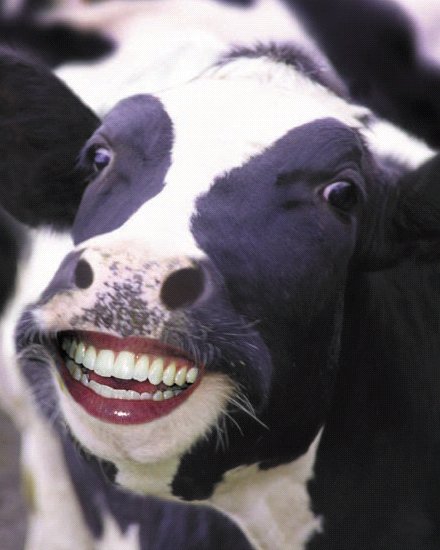
Top cool facts you never knew about Cows

Check out our range of interesting facts about Cow for kids. Learn the world population of cattle, what young cows are called, what they eat and much more.

  1. In deep mud, cows can run faster than horses!
  2. A cow has one stomach with four compartments. The rumen, reticulum, omasum and the abomasum.
  3. Cow are ruminates meaning they can digest food that can normally not be digested.
  4. Like a human’s fingerprints, no two cow’s spots are exactly the same.
  5. A cow is pregnant for nine months. A calf is about 90 pounds when it is born.
  6. Cows have an excellent sense of smell. They can smell up to 5 miles away!
  7. Cattle are herbivores that eat vegetation such as grass.
  8. Cattle stomachs have four chambers which help break down what they eat
  9. There are well over 1 billion cattle in the world.
  10. Cattle are sacred in India.
  11. There are an estimated 300 million cattle in India.
  12. Young cattle are generally known as calves.
  13. Like many other grazing animals cattle have one stomach which is divided into four compartments or chambers: the rumen, reticulum, omasum and abomasum. This allows them to digest grain and grasses most effectively.
  14. Cattle have almost 360° panoramic vision. This helps them to see predators coming from any direction. Enjoy the best collection of animals facts on our site to widen your knowledge.
  15. Cattle have an excellent sense of smell. They can detect odours up to five miles away. They can also hear both low and high frequency sounds beyond human capability.
  16. The cow is a protected animal in Hinduism, and Hindus do not eat beef. Cows are honoured at least once a year, on Gopastami. On this day cows are washed and decorated in temples.
  17. Mahatma Ghandi described a cow as “a poem of compassion”, also stating that “I worship the cow and I shall defend its worship against the whole world”.
  18. The meat of cows is widely eaten by people across the world. Cows' milk is also drunk and used to make other products such as cheese. Many people who consume animal products would like to choose products from animals kept in higher welfare systems. However welfare labelling on products can be confusing. 
  19. Adult females are generally called cows.
  20. Adult males that are not castrated are generally called bulls.
  21. Cattle are red/green color blind.
  22. In the sometimes controversial sport of bull fighting, bulls are angered by the movement of the cape rather than its red color.
  23. Cattle are farmed for a number of agricultural products including meat and dairy products.
If you’re looking for the most interesting tigers facts, you’re at the right place. Let’s check out now.