Domestic Dog

Dogs were probably the first tame animals.

African Wild Dog

The African wild dog, also called Cape hunting dog or painted dog, typically roams the open plains and sparse woodlands of sub-Saharan Afri...

Dingo

Dingoes, though generally associated with Australia, likely originated from Southeast Asia and were introduced to Australia about 3,000 yea...

Hiển thị các bài đăng có nhãn science. Hiển thị tất cả bài đăng

Thứ Ba, 29 tháng 11, 2016

Magnets facts you should know

Here are some of the most interesting Magnets facts you should know

  • Magnets are objects that produce an area of magnetic force called a magnetic field.
  • Magnetic fields by themselves are invisible to the human eye.
  • Iron filings can be used to show magnetic fields created by magnets (such as in the picture to the right).
  • Magnets only attract certain types of metals, other materials such as glass, plastic and wood aren't attracted. That might be one of the most awesome random facts ever.
  • Metals such as iron, nickel and cobalt are attracted to magnets.
  • Most metals however are not attracted to magnets, these include copper, silver, gold, magnesium, platinum, aluminium and more. They may, however, magnetize a small amount while placed in a magnetic field. How much do you know about tiger facts for kids? Let’s check.
  • Magnetism can attract magnetic objects or push them away. Magnets have a magnetic north pole and a magnetic south pole. If the same pole of two magnets are placed near each other they will push away (repel), while if different poles are placed near each other they will pull together (attract).
  • Magnetic objects must be inside the magnetic field to respond, which is why you may have to move a magnet closer for it to have an effect.

  • The Earth's core is believed to be a mix (alloy) of iron and nickel, giving the Earth its own magnetic field.
  • The Earth's magnetic field is responsible for deflecting the solar wind, charged particles that come from the Sun.
  • Magnetic compasses use the Earth's magnetic field to help navigate in north, south, east and west directions. Learn more about amazing science facts via our articles.
  • Electromagnets are created by an electric current running through a surrounding coil. They have many uses including the generation of electricity in hydroelectric dams.

Thứ Tư, 2 tháng 11, 2016

Nightmare Machine know what scares human

Keep reading for more interesting information about Nightmare Machine know what scares human

The idea of artificial intelligence (AI) — autonomous computers that can learn independently — makes some people extremely uneasy, regardless of what the computers in question might be doing.

Those individuals probably wouldn't find it reassuring to hear that a group of researchers is deliberately training computers to get better at scaring people witless.

The project, appropriately enough, is named "Nightmare Machine." Digital innovators in the U.S. and Australia partnered to create an algorithm that would enable a computer to understand what makes certain images frightening, and then use that data to transform any photo, no matter how harmless-looking, into the stuff of nightmares. [5 Intriguing Uses for Artificial Intelligence (That Aren't Killer Robots)


The idea of artificial intelligence (AI) — autonomous computers that can learn independently — makes some people extremely uneasy, regardless of what the computers in question might be doing.

Those individuals probably wouldn't find it reassuring to hear that a group of researchers is deliberately training computers to get better at scaring people witless.

The project, appropriately enough, is named "Nightmare Machine." Digital innovators in the U.S. and Australia partnered to create an algorithm that would enable a computer to understand what makes certain images frightening, and then use that data to transform any photo, no matter how harmless-looking, into the stuff of nightmares. [5 Intriguing Uses for Artificial Intelligence (That Aren't Killer Robots)]

Images created by Nightmare Machine are unsettling, to say the least. Iconic buildings from around the world appear eroded and distorted within shadowy settings or amid charred and smoldering landscapes, glimpsed through what appears to be murky, polluted water or toxic gas clouds.

Nightmare Machine's faces are equally disturbing. Some of the subjects are almost abstract, but subtle — creepy suggestions of hollow eyes, bloody shadows and decaying flesh still cause unease. Even the lovable Muppet Kermit the Frog emerges from the process as a zombie-like creature that would terrify toddlers — and adults, too.

The primary reason for building Nightmare Machine was to explore the common fear inspired by intelligent computers, its trio of designers told Live Science. They wanted to playfully confront the anxiety inspired by AI, and simultaneously test if a computer is capable of understanding and visualizing what makes people afraid.

"We know that AI terrifies us in the abstract sense," co-creator Pinar Yanardag, a postdoctoral researcher at MIT Media Lab in Massachusetts, wrote in an email. "But can AI scare us in the immediate, visceral sense?"

The designers used a form of artificial intelligence called "deep learning" — a system of data structures and programs mimicking the neural connections in a human brain — to teach a computer what makes for a frightening visual, according to co-creator Manuel Cebrian, a principal research scientist at CSIRO Data61 in Australia.

"Deep-learning algorithms perform remarkably well in several tasks considered difficult or impossible," Cebrian said. "Even though there is a lot of room for improvement, some of the faces already look remarkably creepy!"

Once deep-learning algorithms understood the visual elements that were commonly perceived as spooky, they applied those styles to images of buildings and human faces — with chilling results


"Elon Musk said that with the development of AI, we are 'summoning the demon,'" co-creator Iyad Rahwan, an associate professor at MIT Media Lab, told Live Science about science facts.

"We wanted to playfully explore whether and how AI can indeed become a demon, that can learn how to scare us, both by extracting features from scary images and subsequent refinement using crowd feedback," Rahwan said. He added that the timing of their spooky experiment — close to Halloween — was no accident. It may be one of the most awesome infor from factoflife we’ve enjoyed.


"Halloween has always been a time where people celebrate what scares them," he said, "so it seems like a perfect time for this particular hack." 

"Our research group's main goal is to understand the barriers between human and machine cooperation," Rahwan said. "Psychological perceptions of what makes humans tick and what makes machines tickare important barriers for such cooperation to emerge. This project tries to shed some light on that front — of course, in a goofy, hackerish Halloween manner!"

And if you're brave enough, Nightmare Machine could use your help to learn how to become even scarier.

The project's creators used deep-learning algorithms to generate frightening images of dozens of faces, tweaking the results to make them look even more disturbing. Nightmare Machine visitors can vote on these so-called "Haunted Faces," to help the algorithm "learn scariness," according to instructions on the website.

Teaching a computer to be more terrifying — what could possibly go wrong?
You might be like to see weird but true, crazy, fun, amazing facts, fact of life, fact of the day, and funny videos, video clips, joke of the day, images, photos.

Thứ Hai, 31 tháng 10, 2016

The most rare and amazing science facts from all over the world

Some of the most rare and amazing science facts from all over the world. Keep reading  to find out some facts about our amazing facts!

1. Polar bears are nearly undetectable by infrared cameras


Thermal cameras detect the heat lost by a subject as infrared, but polar bears are experts at conserving heat. The bears keep warm due to a thick layer of blubber under the skin. Add to this a dense fur coat and they can endure the chilliest Arctic day.

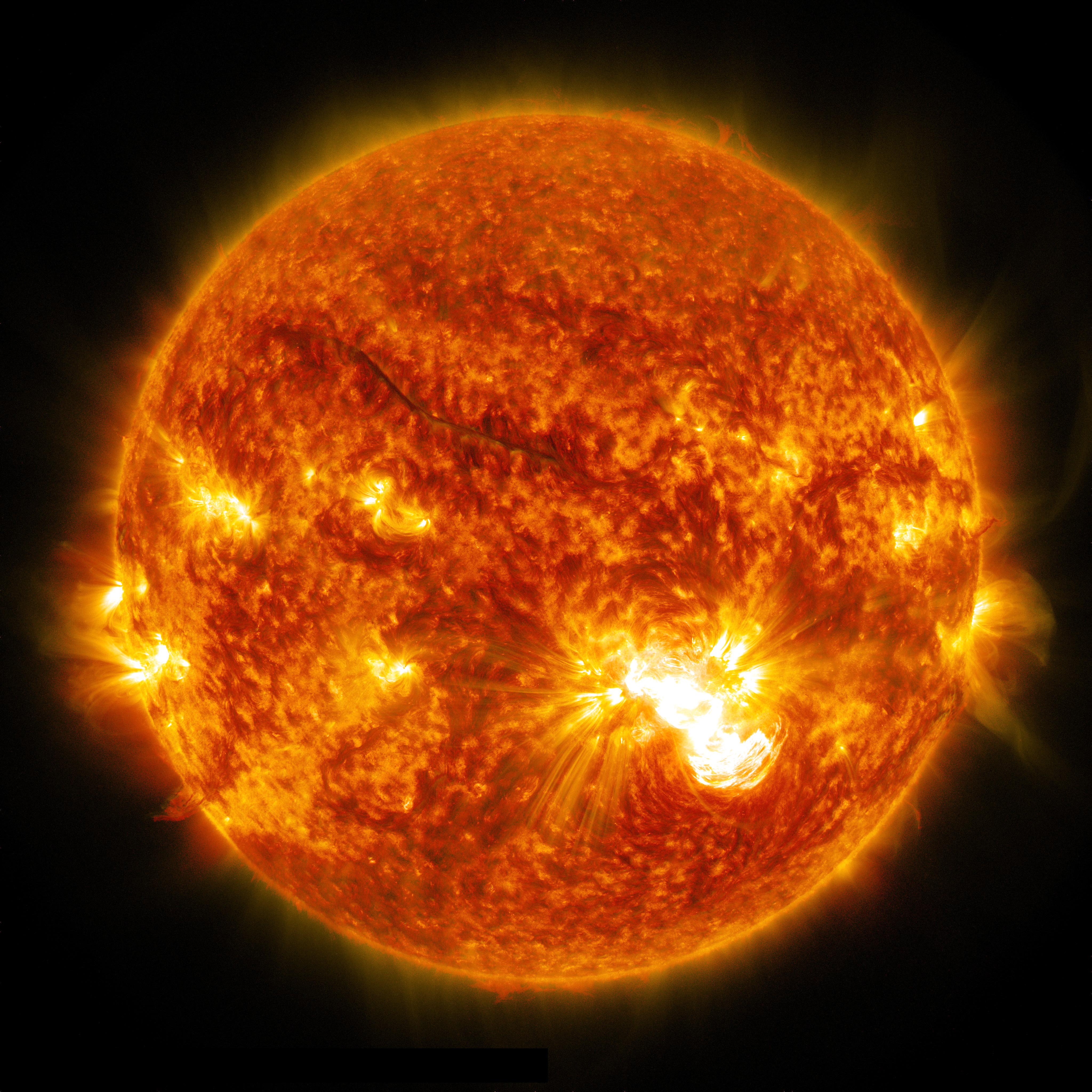
2. It takes 8 minutes, 19 seconds for light to travel from the Sun to the Earth


In space, light travels at 300,000 kilometres (186,000 miles) per second. Even at this breakneck speed, covering the 150 million odd kilometres (93 million miles) between us and the Sun takes a considerable time. And eight minutes is still very little compared to the five and a half hours it takes for the Sun’s light to reach Pluto. This is one of the most amazing facts ever.

3. If you took out all the empty space in our atoms, the human race could fit in the volume of a sugar cube


The atoms that make up the world around us seem solid, but are in fact over 99.99999 per cent empty space. An atom consists of a tiny, dense nucleus surrounded by a cloud of electrons, spread over a proportionately vast area. This is because as well as being particles, electrons act like waves. Electrons can only exist where the crests and troughs of these waves add up correctly. And instead of existing in one point, each electron’s location is spread over a range of probabilities – an orbital. They thus occupy a huge amount of space.

4. Stomach acid is strong enough to dissolve razor blades


Your stomach digests food thanks to highly corrosive hydrochloric acid with a pH of 2 to 3. This acid also attacks your stomach lining, which protects itself by secreting an alkali bicarbonate solution. The lining still needs to be replaced continually, and it entirely renews itself every four days.

5. The Earth is a giant magnet


Earth’s inner core is a sphere of solid iron, surrounded by liquid iron. Variations in temperature and density create currents in this iron, which in turn produce electrical currents. Lined up by the Earth’s spin, these currents combine to create a magnetic field, used by compass needles worldwide.

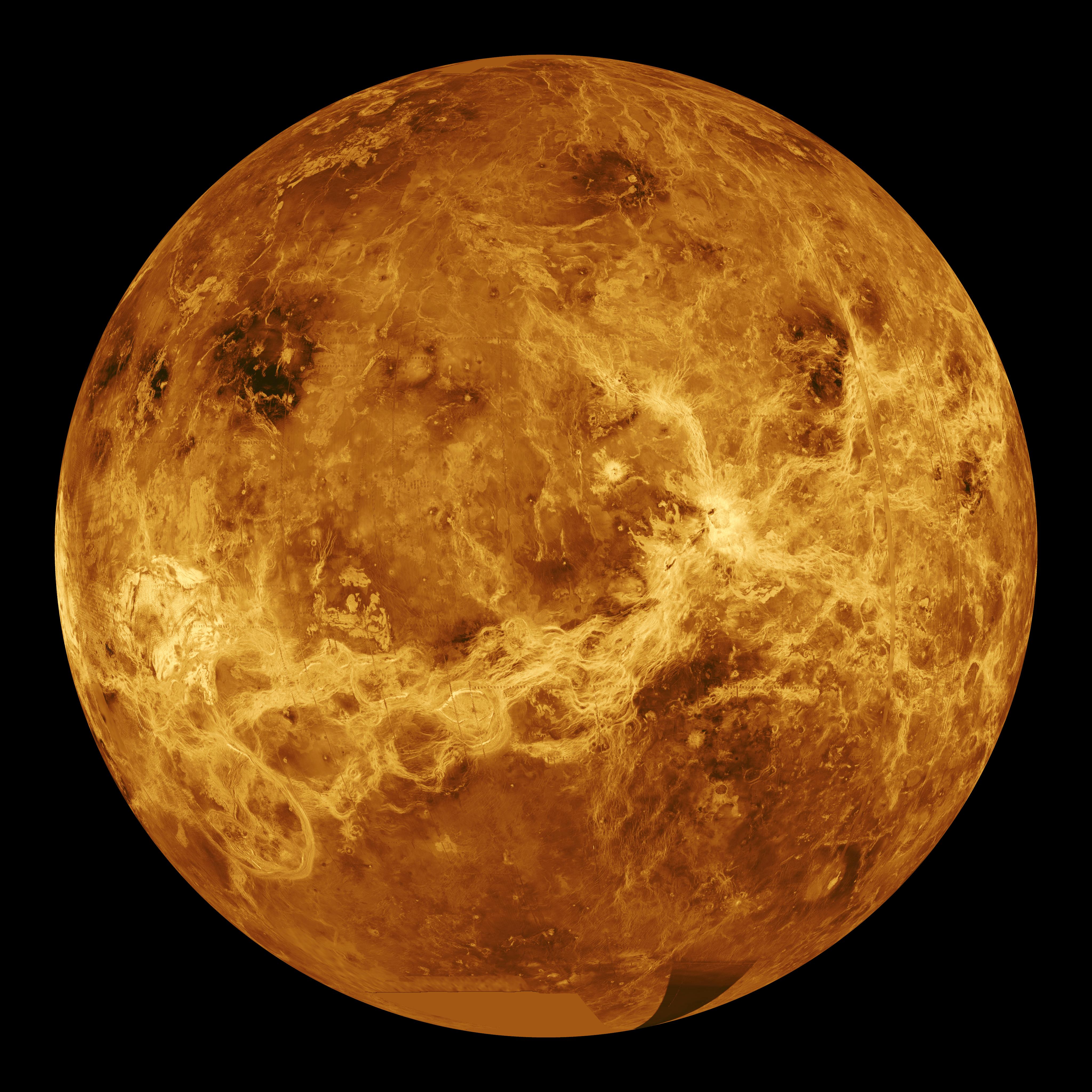
6. Venus is the only planet to spin clockwise


Our Solar System started off as a swirling cloud of dust and gas which eventually collapsed into a spinning disc with the Sun at its centre. Because of this common origin, all the planets move around the Sun in the same direction and on roughly the same plane. They also all spin in the same direction (counterclockwise if observed from ‘above’) – except Uranus and Venus. Uranus spins on its side, while Venus defiantly spins in the complete opposite direction. The most likely cause of these planetary oddballs are gigantic asteroids which knocked them off course in the distant past.

7. A flea can accelerate faster than the Space Shuttle


A jumping flea reaches dizzying heights of about eight centimetres (three inches) in a millisecond. Acceleration is the change in speed of an object over time, often measured in ‘g’s, with one g equal to the acceleration caused by gravity on Earth (9.8 metres/32.2 feet per square second). Fleas experience 100 g, while the Space Shuttle peaked at around 5 g. The flea’s secret is a stretchy rubber-like protein which allows it to store and release energy like a spring.

Check out for more cool, random, weird but true, crazy, fun, amazing facts, fact of life, fact of the day, and funny videos, video clips, funny pics, images, photos.

Thứ Năm, 27 tháng 10, 2016

An amazing world of Jupiter facts

Enjoy our wide range of animal facts and it’s the time for science facts via this amazing article 


1. Jupiter is the 5th planet from the Sun.

2. Jupiter is the largest planet in our solar system, with a diameter of 142,984 kilometers.

3. Jupiter Planet is classed as a gas giant, as is Saturn, Uranus, and Neptune.

4. The Romans named the planet after Jupiter, King of the Gods in Ancient Roman mythology.

5. Jupiter Planet was discovered in 1610 by Galileo Galilei. Galileo also discovered four of the largest moons of Jupiter. These moons are aptly called the Galilean Moons in honor of his discover. The four moons discovered by Galileo were Callisto, Ganymede, Europa and Io. The largest moon of Jupiter, Ganymede, has a greater diameter than Mercury Planet.

6. From the Earth, Jupiter Planet is the third brightest object in the night sky, right after the Moon and Venus Planet.

7. Jupiter is so massive that its total mass is twice as much as the mass of all planets in the Solar System combined together. Jupiter Planet is capable of holding 1300 Earths in it. However, the mass of Jupiter is only 1 thousandths of the total mass of the Sun.


8. Jupiter atmosphere is composed of 10.2% helium, 89.8% molecular hydrogen, and trace amounts of ammonia hydrosulfide aerosols, water ice aerosols, water, ethane, hydrogen deuterite, ammonia, and methane.

9. Jupiter is the fastest spinning planet in the Solar System. This planet may complete a full rotation around its axis in just less than 10 hours. That’s amazing. It completes a rotation of the Sun every 11.86 years.

10. The core of Jupiter is massive and dense. Its composition is uncertain. Some scientists believe that it is made of rocks, metals, water ice, ammonia ice and methane ice. All we know is that this core is surrounded by a layer of helium-rich fluid metallic hydrogen and the whole thing is then wrapped up in an atmosphere that primarily consists of molecular hydrogen. Here is one of the most amazing facts on the planet we had known.

11. The mass of the core of Jupiter Planet is 10 times the mass of our Earth. The layer of fluid metallic hydrogen covering the core extends up to 90% of the diameter of the planet. 

12. If Jupiter had managed to grab 80 times more mass than its current mass, it would actually end up being a star instead of a planet.

13. Jupiter has 67 moons in total. Most of them are named after names of lovers of RomanGods. 

14. The average distance from Jupiter to the Sun is about 778 million kilometers, which is nearly 5.2 times the distance from the Earth to the Sun.

15. The Great Red Spot is probably the most remarkable feature of Jupiter Planet. In fact, it is a persistent storm similar to a hurricane on Earth. This storm has been visible for at least 300 years. It also changes its colors quite often, from brick red color to slight brown. 


16. Jupiter’s atmosphere is relatively similar to the Sun’s atmosphere, which mostly consists of helium and hydrogen.

17. The magnetic field of Jupiter is 20,000 times stronger to that of Earth’s magnetic field.

18. The white clouds of Jupiter are formed by frozen ammonia crystals while the dark clouds are the results of other chemicals found in the darker belts.

19. The gravity of Jupiter is 2.4 times higher than the Earth’s. So it means that a person weighing about 200 pounds on Earth will weigh up to 480 pounds on this planet. It's the real, not just jokes for fun.

20. Its atmosphere pressure is up to 1000 times greater than our Earth’s one, which means you can be easily crushed to death in this planet.

Chủ Nhật, 14 tháng 8, 2016

How importance of science is?

Everyone know the science facts that science is important because it influences most aspects of everyday life but how? 

Science is important because it influences most aspects of everyday life, including food, energy, medicine, transportation, leisure activities and more. Science improves human life at every level, from individual comfort to global issues.


When they hear the term “science”, a lot of people usually imagine some guy wearing a lab coat and safety glasses, operating some high-tech machinery or mixing some funny-looking substances; in fact, science can be a lot simpler than that. Science is actually not something that’s strictly happening into a laboratory, but rather everything that follows a certain pattern, and can be replicated if some conditions are met. Throwing a rock up, just to see it fall down to the ground can be considered science, as the rock will always fall down, thus demonstrating that gravity is present, and that it works.

The bigger misconception is that you have to understand how it all works in order to take advantage of it – this couldn’t be more false. Just think about it this way: you may not know much about electricity or electronics, but you know that if your TV is plugged into the power socket, once you push the power button on the remote, it will turn on. How do you know that? It’s simple – because you’ve done it over and over again, with the same results. But science gave us much more than non-stop television.

For other facts of life

Thứ Tư, 10 tháng 8, 2016

Amazing facts about sport science

Here are some interesting science facts of science sport. Enjoy!


Curling stones used in the Olympic sport of curling are made from granite.

Astronaut Alan Shepard played golf on the Moon after he smuggled a golf ball and club on to the NASA Apollo 14 mission to the Moon in 1971.
Anaerobic exercise refers to high intensity activities over a short duration (e.g. sprinting) while aerobic exercise refers to physical activity performed at a moderate level over longer periods of time (e.g. jogging).

Regular exercise helps boost the immune system.

The string tension of most tennis racquets is around 50 to 70 pounds (220 to 310 newtons). With lower tension a tennis racquet produces less control and more power while higher tension produces more control and less power.

The fastest recorded tennis serves are over 155 mph (250 kph).

Regulation Major League baseballs feature exactly 108 stitches.

Snowboarders and ice skaters glide on a thin layer of water as their skates and boards heat the snow beneath them.

Modern swimwear has developed to the point where the fabric and designs are actually faster through the water than human skin. Controversial neck to ankle suits have been one of the reasons behind the consistent breaking of world record times since they were introduced around the year 2000.